PDF version
TL;DR
During the coalescence of bubbles with different sizes, the speed of the ensuing capillary waves remains almost unchanged and scales with the inertio‐capillary velocity. However, the strength (or curvature) of these waves depends on the bubble size ratio. In the equal‐sized case, the wave curvature diminishes and then plateaus, whereas for highly asymmetric (large vs. tiny) bubbles, the curvature initially decreases but then rebounds sharply due to the changing geometry. Two approximate scaling laws emerge for the strongest wave curvature:  in the low‐viscosity limit and  in the moderate‐to‐higher viscosity regime. Experimental data diverge somewhat from these simple power laws, indicating a need for refined models to explain the distinct curvature behavior at low Ohnesorge numbers.
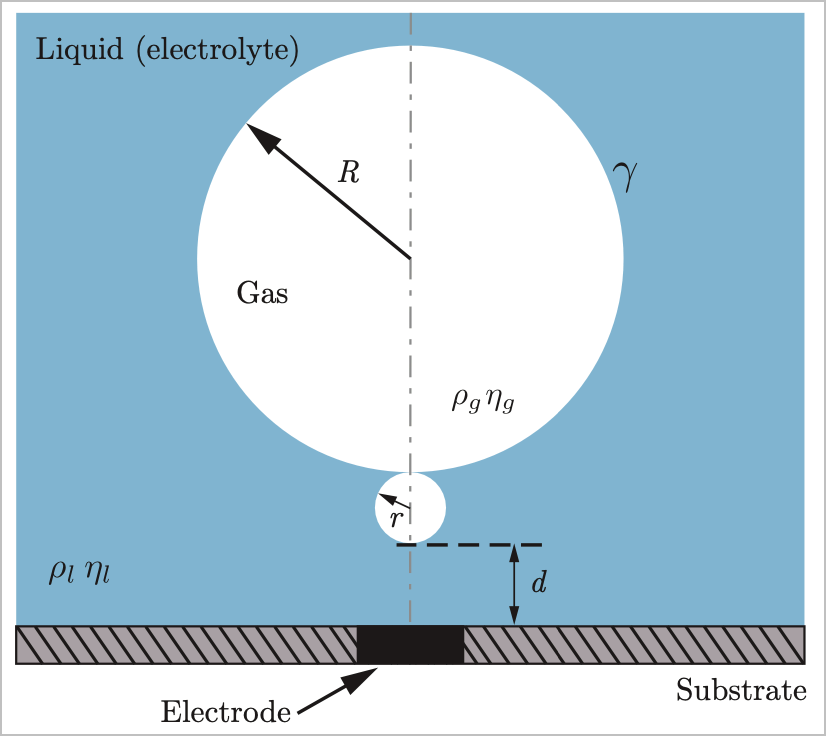 Figure 1. Schematic of asymmetric coalescence of bubbles. Following the coalescnece, train of capillary waves travel on the surface of both bubbles.
Control parameters
Ohnesorge number (ratio of the inertio-capillary and inertio-viscous timescales)
Asymmetry parameter (ratio of the radii of the two bubbles)
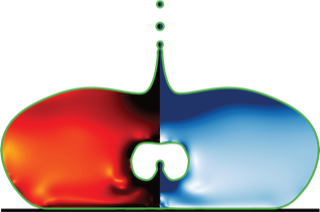
A typical coalescence events
Coalescence of equal sized bubbles (
Coalescence of tiny bubbles with extremely large ones (
Looking at the speed of the capillary waves
Important
The velocity of this capillary waves still scales with the inertio-capillary velocity!
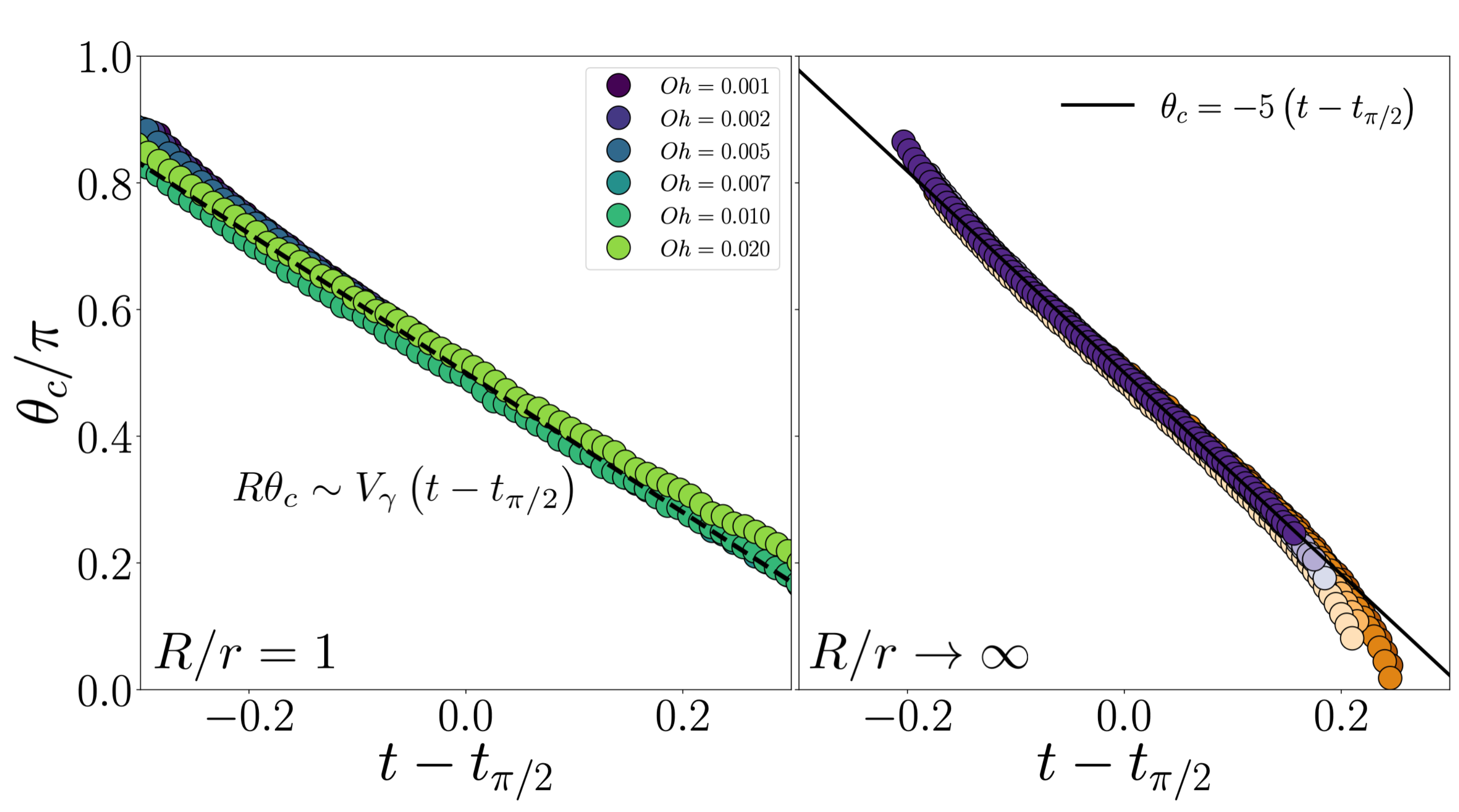 Figure 2. Trajectory of the capillary waves during coalescence of same sized bubbles (
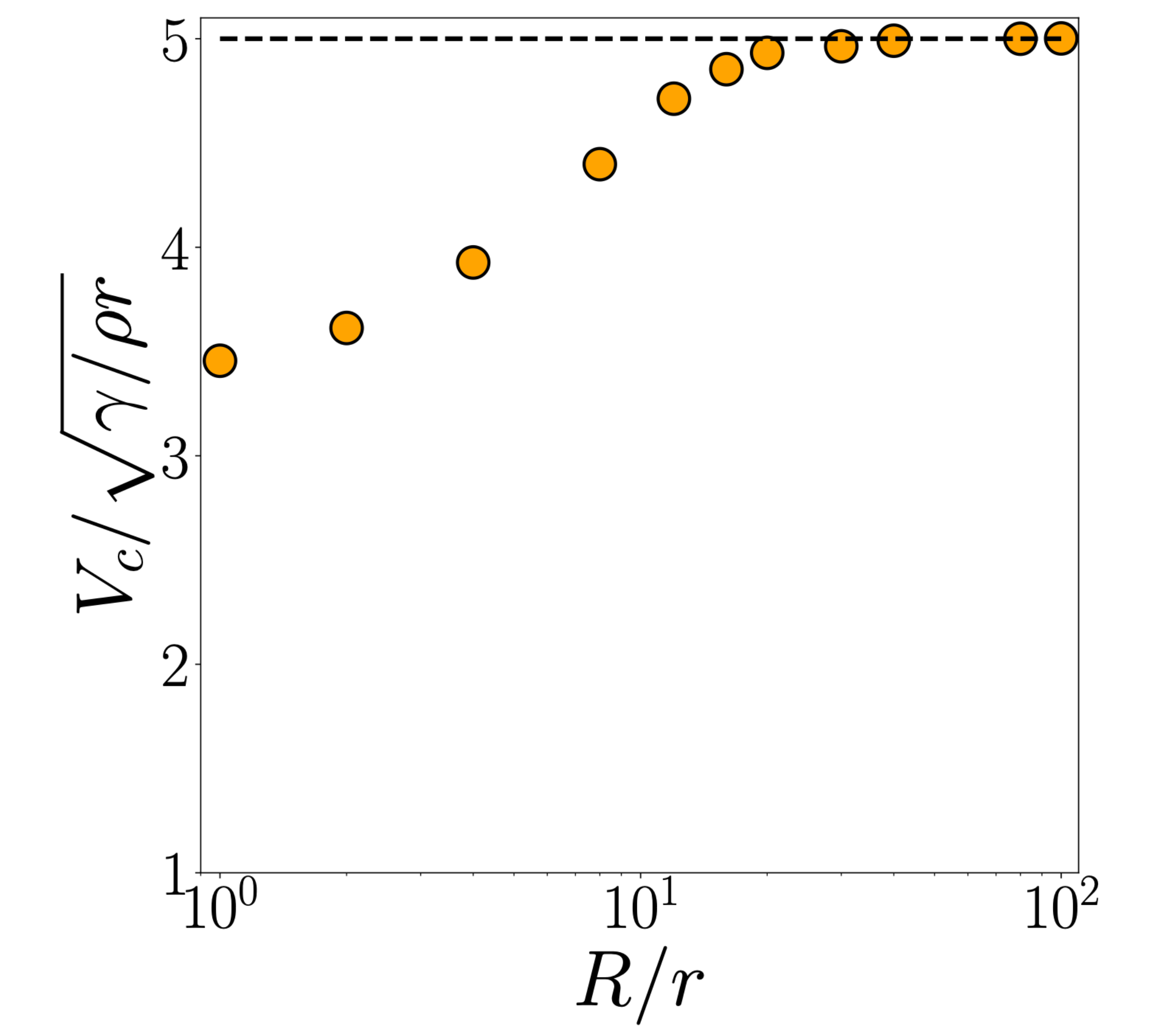 Figure 3. Trajectory of the capillary waves during coalescence of same unequal sized bubbles with
Note
Infact the velocity hardly changes from
to
Strength of capillary waves for
Although the speed of capillary waves remain the same. There can be differences in the strength of the waves.
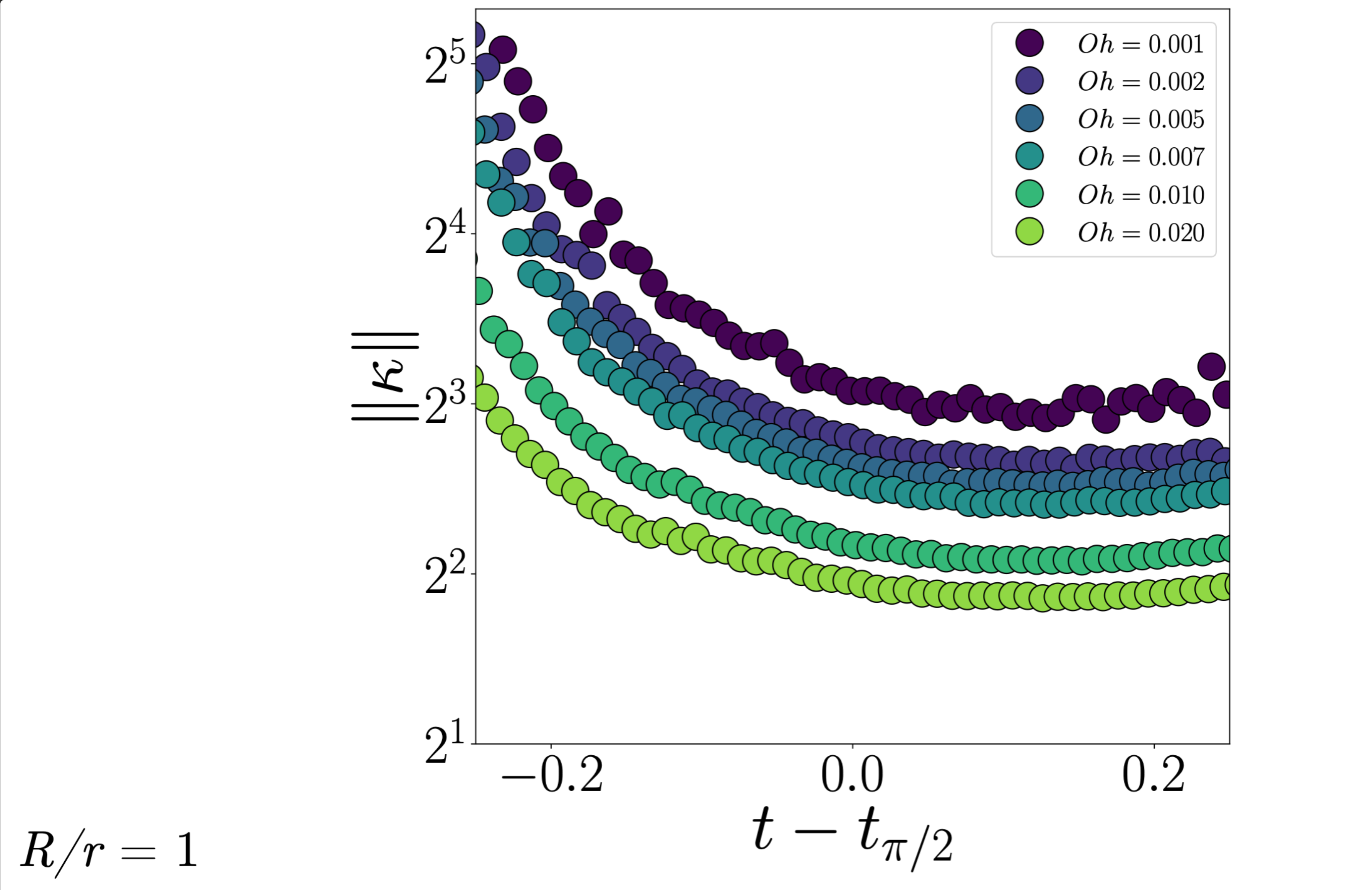 Figure 4. The curvature of the strongest capillary wave decreases in time and then saturates to a constant value.
This is different from what happens at
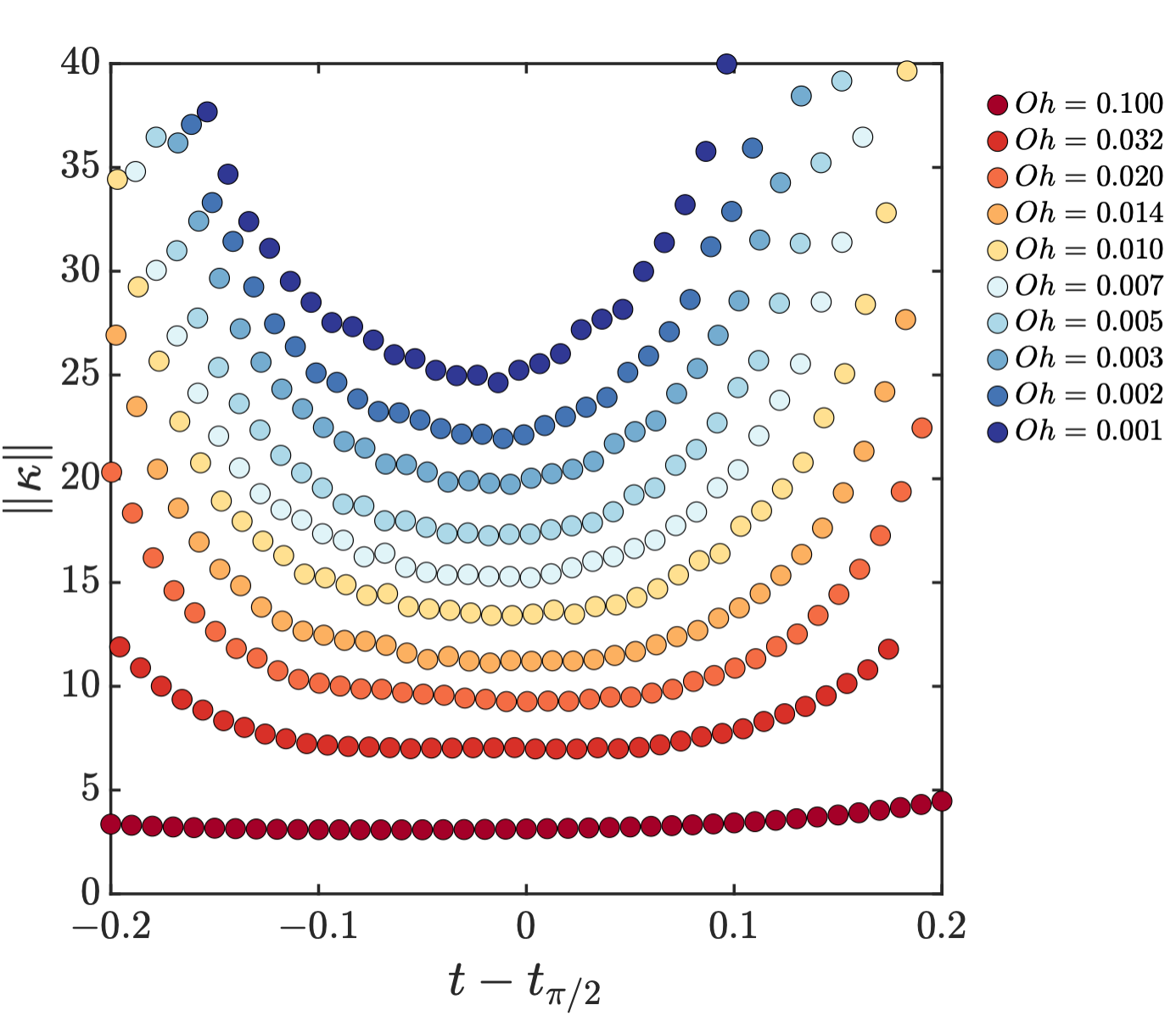 Figure 5. The curvature of the strongest capillary wave decreases in time, reaches a minima, and then increases sharply as the bubble cavity configuration changes (see video above, and also see [1]).
Can we understand this change in curvature?
Given the asymmetry at
Looking at the balance between the kinetic energy (generated immediately following the coalescence event),
Note: Here, we balance the kinetic energy of the capillary waves (across volume
Consequently, the volume scale associated with the kinetic energy carried by the waves is
Rearranging the above equation, we can find the time scale associated with this transfer process:
Rearranging the expression and substituting inertio-capillary timescale
Normalize both sides by
In the low viscosity limit,
In moderate high viscosity limit,
Rearranging the expression and filling in the general equation relating
or,
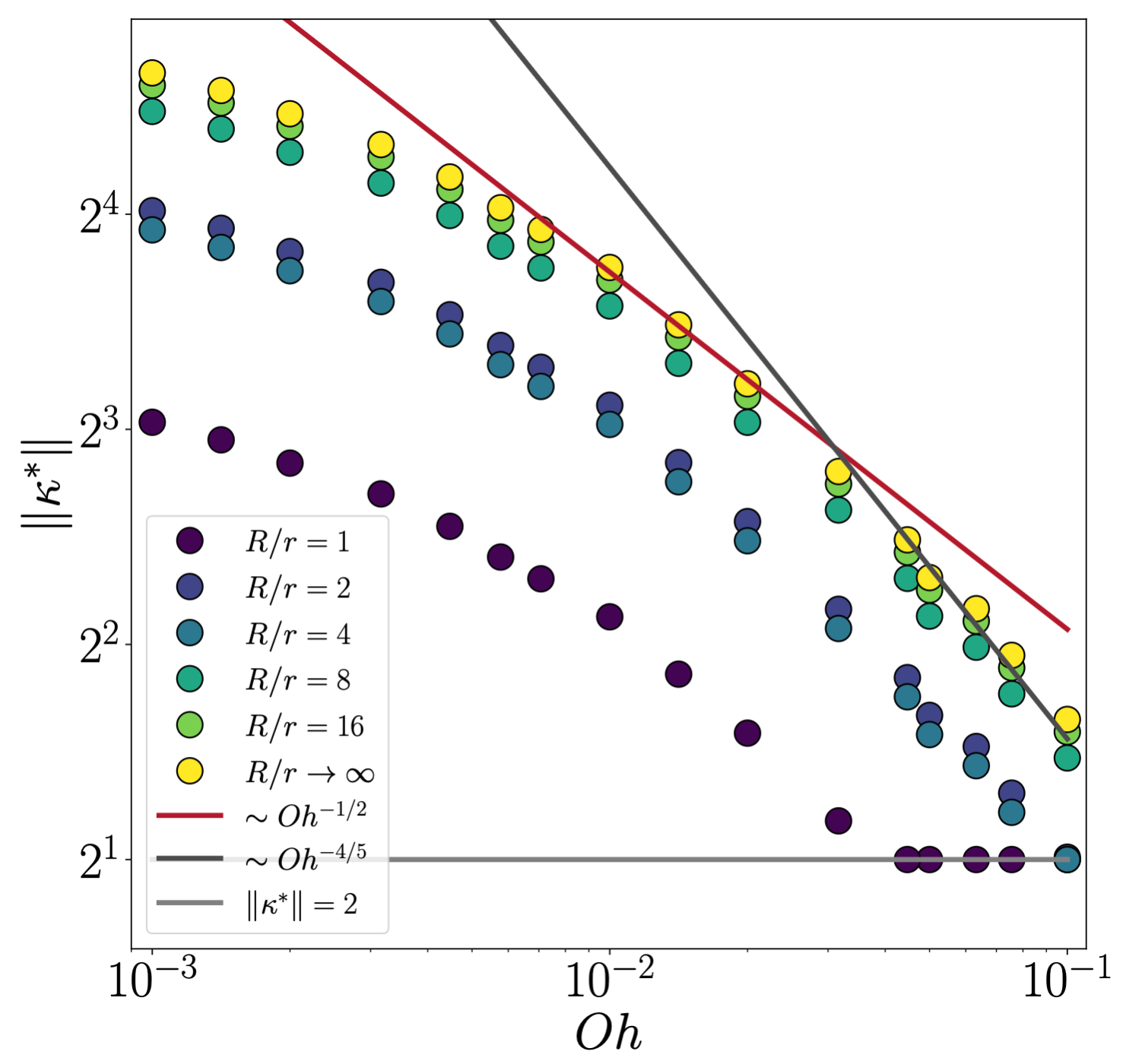 Figure 6. Minumum curvature of the strongest capillary wave as a function of the Ohnesorge number and the radii ratio of the two bubbles. The two scaling relations developed above are reasonable but the deviations observed in the data leave room for improvement.
Note:
The scaling laws developed here are also described in detail in [2]
So, why does the radii ratio influence the curvature strongly but not the wave speed? Unfortunately, this is still an open question. The hand-wavy argument is given in this document (including the geometric and asymmetry arguments) but the scaling laws developed here only work approximately and clearly the data for
More resources
[1] V. Sanjay, D. Lohse, and M. Jalaal, “Bursting bubble in a viscoplastic medium,” J. Fluid Mech., vol. 922, p. A2, 2021.
[2] J. M. Gordillo and J. Rodríguez-Rodríguez, “Capillary waves control the ejection of bubble bursting jets,” J. Fluid Mech., vol. 867, pp. 556–571, May 2019, doi: 10.1017/jfm.2019.161.
Metadata
Author:: Vatsal Sanjay Date published:: Jan 12, 2025
Date modified:: Jan 26, 2025 at 11:50 CET
Back to main website